
Recently I finished Joyce’s Ulysses for what I hope is the last time. I don’t enjoy much about the novel, though Joyce is of course famous for his play on language, often expressed by the creation of compounds. The most famous Joycean compound is probably “heaventree,” a delightful word that folds botany, comparative mythology, astronomy, and theology into a single neologism.
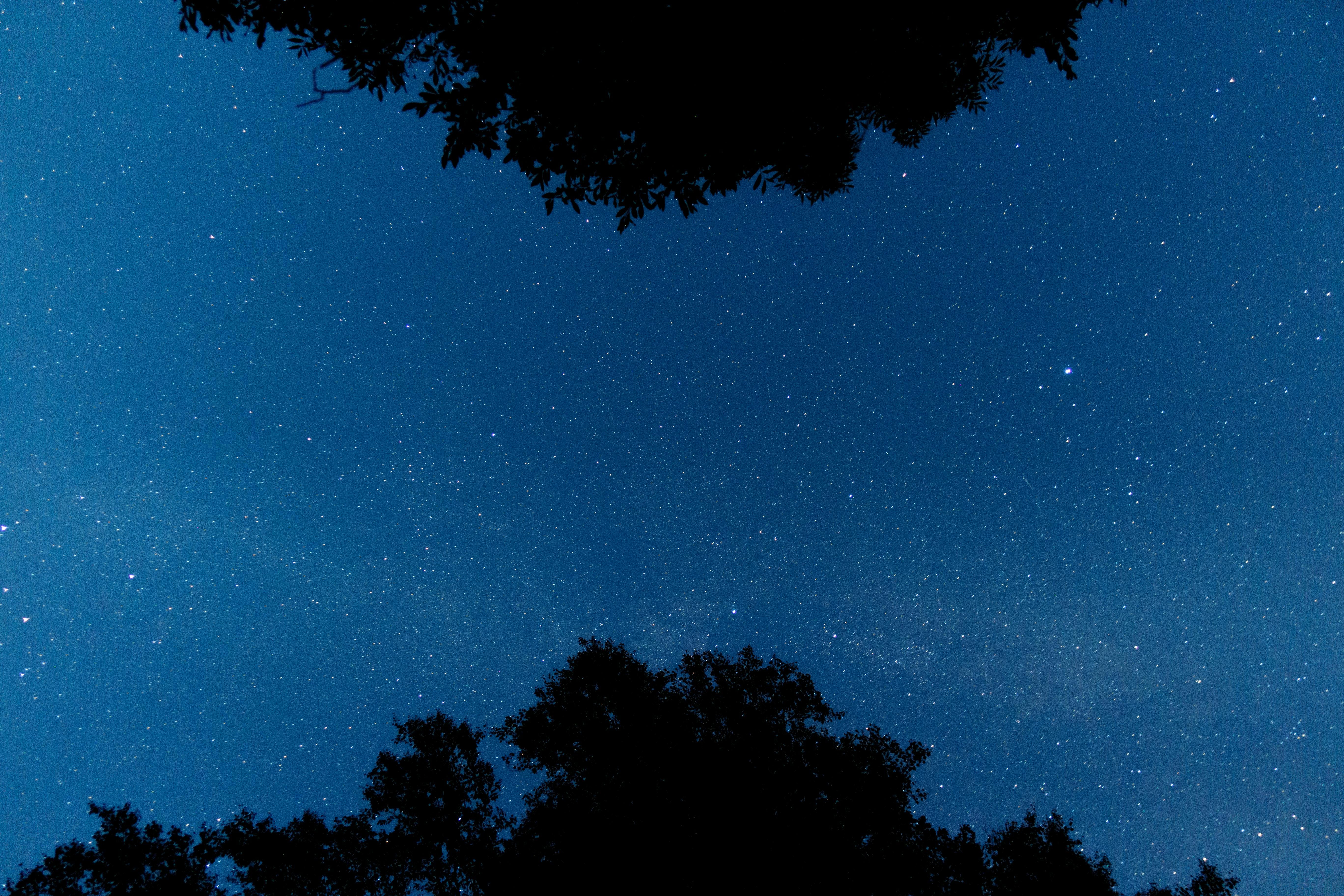
Joyce’s word appears in “Ithaca,” near the end of Ulysses: “The heaventree of stars hung with humid nightblue fruit.” The scene is Bloom’s back garden, with Bloom and Stephen looking up at the night sky just before they part.
A few pages later, Joyce pointedly negates is: “That it was not a heaventree, not a heavengrot, not a heavenbeast, not a heavenman.” The word thus oscillates between ravishing image and doctrinal impossibility, an image glimpsed and then withdrawn.
It surprised me to learn that “heaventree” is not a Joycean formation; though it looks like one, it is in fact attested twice before Ulysses was published. The O.E.D. records heaven-tree, or root of heaven, from 1835 for Alianthus altissima, via a Malay expression glossed as “tree reaching to the sky.” A second, “rare” sense names a mythic tree that rises from underworld through earth to heaven in Malay and Polynesian belief.
Victorian anthropology and mythology pick up this heaven-tree, sometimes likened to Yggdrasil and other cosmic trees. One cited 1865 account of Samoa speaks of “a heaven-tree, where people went up and down,” its fall spanning sixty miles, while later writers describe its leaves explicitly as stars.
Stars as leaves, fruit as stars
A mid-nineteenth century poem (John Flavel Mines, 1858) already imagines “Leaves of the great Heaven tree” as “resplendent stars, in purple meadow trembling.” Joyce’s “heaventree of stars” with “nightblue fruit” looks like a compressed, modernist recasting of the same image: the sky as tree, the stars as foliage, then intensified into weighty, humid “fruit.” Martin Amis has called this Ulysses’s “most ravishing sentence.
Logic against heaven
Within the episode’s pseudo-scientific framework, the heaventree is immediately demystified. Bloom decides “that it was not a heaventree … that it was a Utopia, there being no known method from the known to the unknown.” The word thus stages, and then erases, the notion of a physical ladder between earth and heaven.
Critics of the novel have recognized in this cancellation the chapter’s theology: Stephen’s departure is read as an “Ascension,” yet Bloom is left in the “cold of interstellar space.” The heaventree offers, briefly, a mythic continuous cosmos; its withdrawal reasserts discontinuity, a gap between Bloom and Stephen, between Ireland and the world, between human understanding and whatever lies beyond.